• Chapter in The Handbook of Teaching Qualitative and Mixed Research Methods

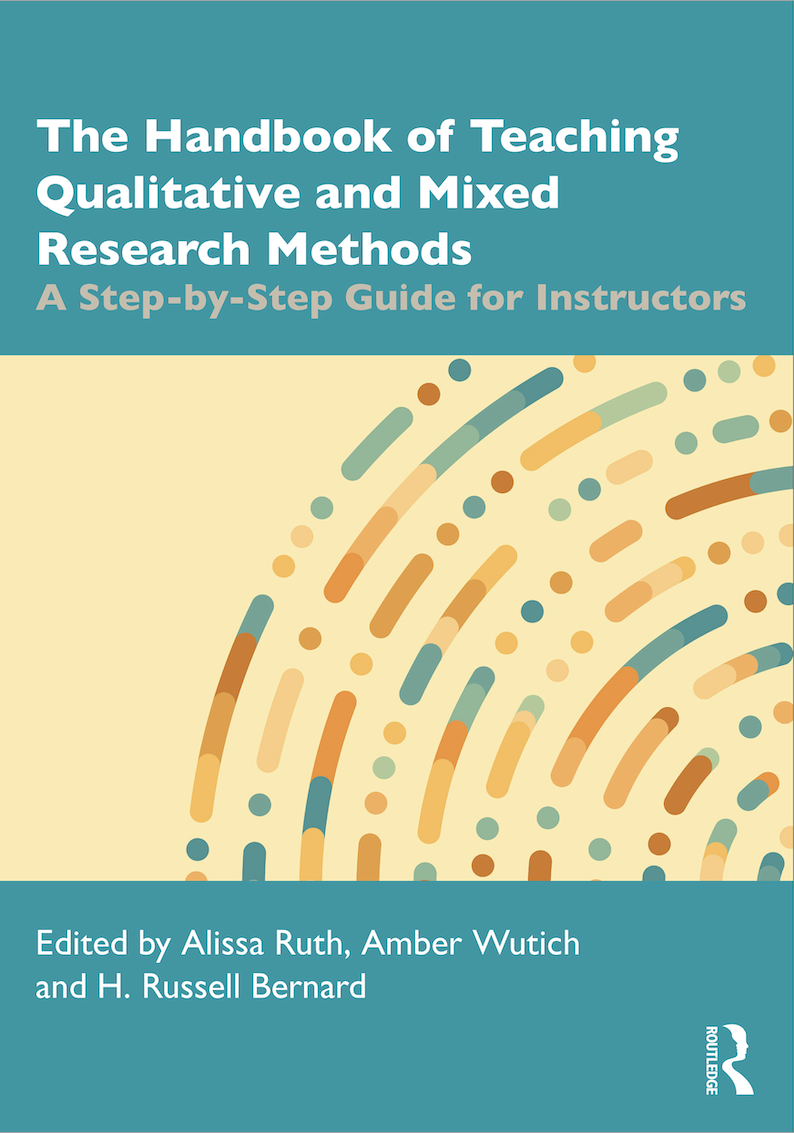
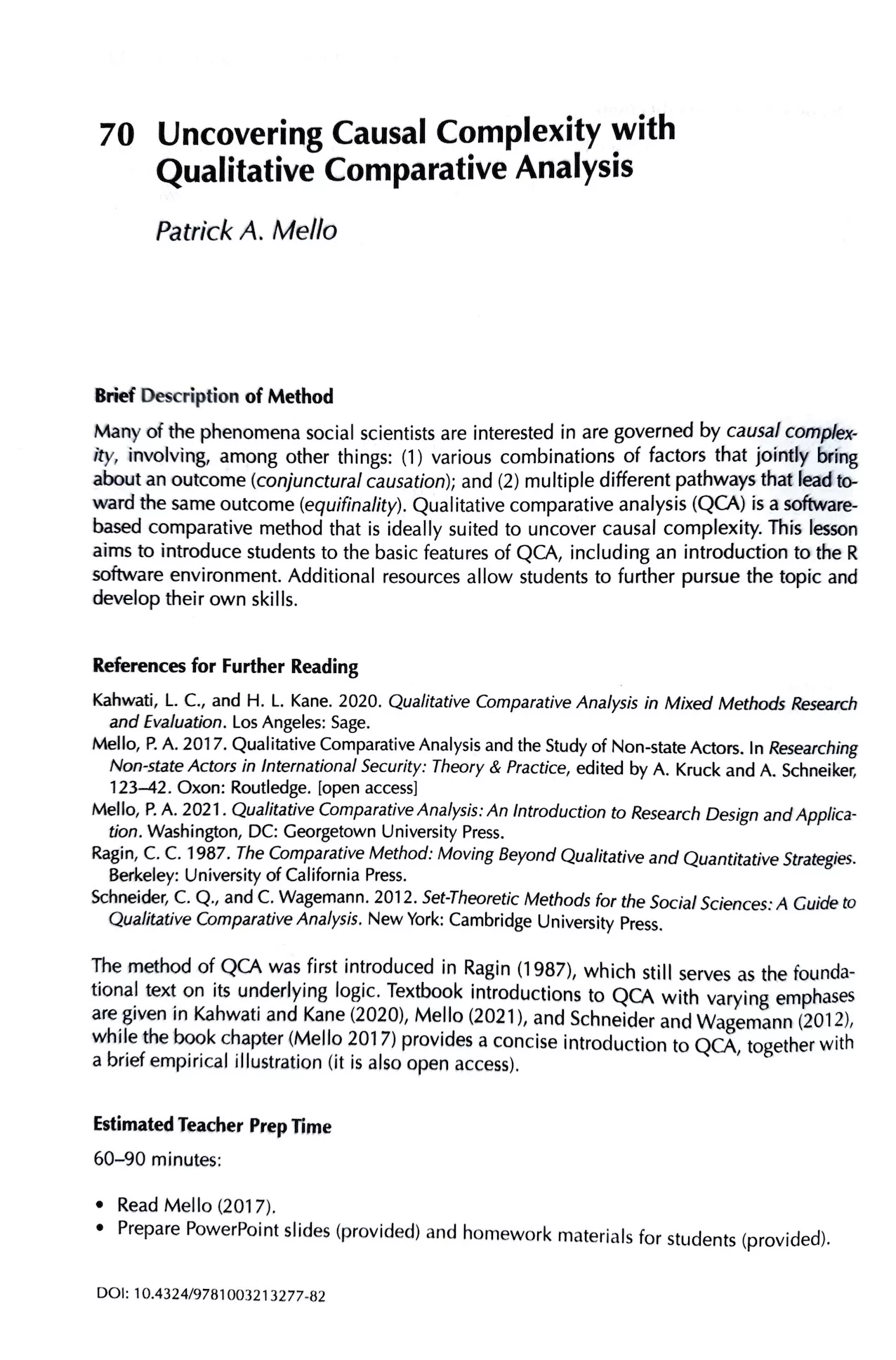
    I contributed a book chapter to The Handbook of Teaching Qualitative and Mixed Research Methods: A Step-by-Step Guide for Instructors, co-edited by Alissa Ruth, Amber Wutich, and H. Russell Bernard and recently published by Routledge. My chapter, entitled “Uncovering Causal Complexity with Qualitative Comparative Analysis” provides material for instructors to teach causal complexity and QCA usage through a combination of interactive lectures, homework materials, and in-class discussions. Overall, the Handbook presents a collection of 71 concise chapters on qualitative and mixed methods, covering diverse topics such as research ethics, sampling techniques for qualitative research, visual and participatory methods, linguistic analysis, network analysis, and six chapters on modeling and comparative analyses, which include my QCA chapter and, among others, a chapter on comparative ethnography by Raul Pacheco-Vega and a chapter on effective calibration practices by Claude Rubinson and Roel Rutten. The complete contents and further information on the Handbook can be found here.
  • QCA Paper Development and Expert Workshops in Antwerp


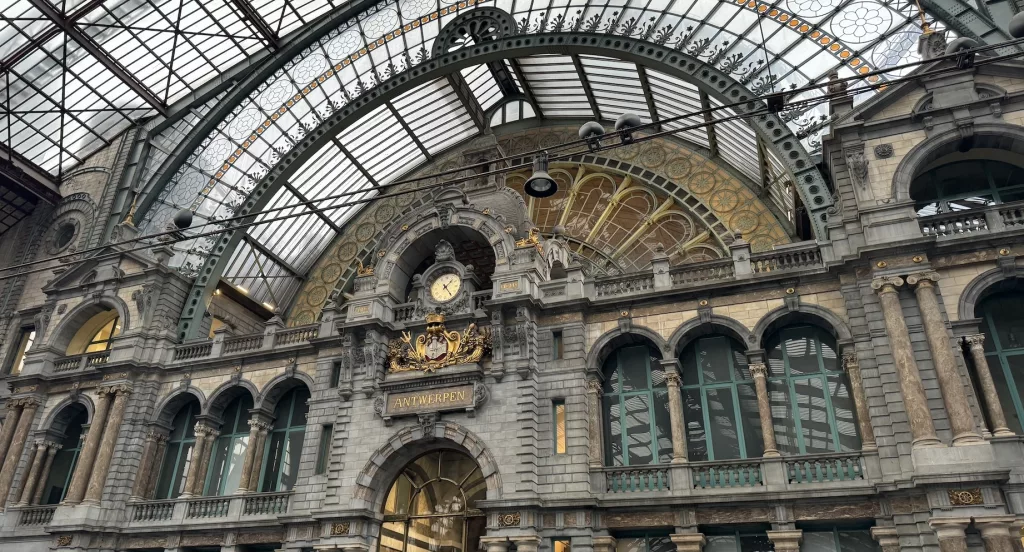
    On December 12-14, the QCA Paper Development Workshop and the QCA Expert Workshop took place in Antwerp at the Antwerp Management School (AMS), hosted by Bart Cambré (AMS) and Benoît Rihoux (UCLouvain) and the co-organizers of the Paper Development Workshop Julia Leib (Uni Leipzig), Christoph Niessen (Universiteit Leiden), and Christian Rupietta (Queen’s University Belfast). The workshops brought together a group of about 50 experts and practitioners from around the globe to discuss methodological innovations and empirical applications. Together with Benoît Rihoux, I co-chaired a paper development roundtable, where we discussed and commented upon four empirical applications.

  • Open Access Article Published in Politics and Governance

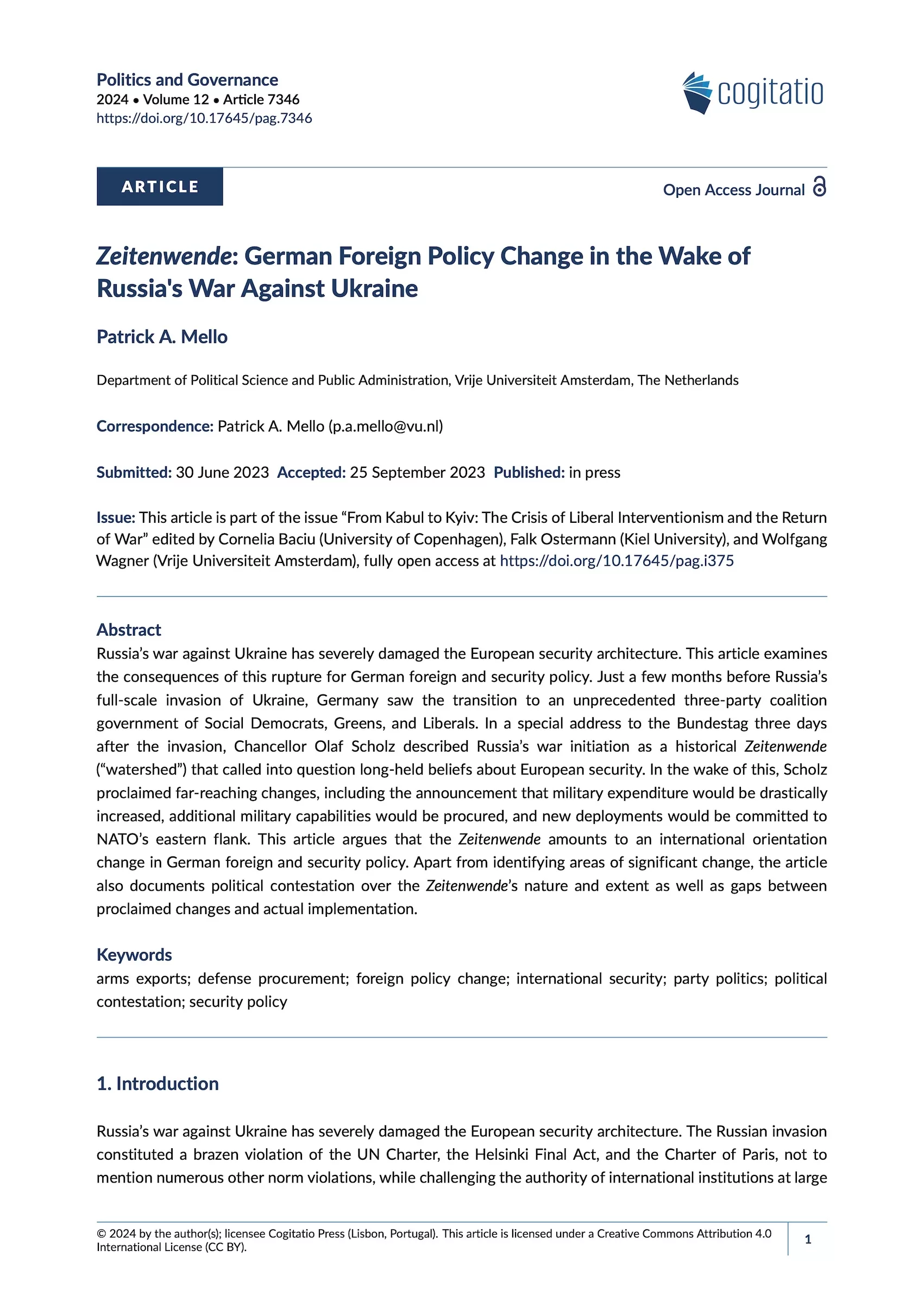
    Politics and Governance published the open access article “Zeitenwende: German Foreign Policy Change in the Wake of Russia’s War Against Ukraine” as an ahead-of-print. In the article, I examine the foreign and security policy of the German ‘traffic-light’ coalition under Chancellor Scholz to assess whether and to which extent the Russian aggression against Ukraine has marked an international orientation change in German foreign and security policy (see abstract below). The article is part of a forthcoming special issue “From Kabul to Kyiv: The Crisis of Liberal Interventionism and the Return of War”, co-edited by Cornelia Baciu (University of Copenhagen), Falk Ostermann (Kiel University), and Wolfgang Wagner (Vrije Universiteit Amsterdam) and based on an authors’ workshop at the University of Copenhagen.


    Abstract: Russia’s war against Ukraine has severely damaged the European security architecture. This article examines the consequences of this rupture for German foreign and security policy. Just a few months before Russia’s full‐scale invasion of Ukraine, Germany saw the transition to an unprecedented three‐party coalition government of Social Democrats, Greens, and Liberals. In a special address to the Bundestag three days after the invasion, Chancellor Olaf Scholz described Russia’s war initiation as a historical Zeitenwende (“watershed”) that called into question long‐held beliefs about European security. In the wake of this, Scholz proclaimed far‐reaching changes, including the announcement that military expenditure would be drastically increased, additional military capabilities would be procured, and new deployments would be committed to NATO’s eastern flank. This article argues that the Zeitenwende amounts to an international orientation change in German foreign and security policy. Apart from identifying areas of significant change, the article also documents political contestation over the Zeitenwende’s nature and extent as well as gaps between proclaimed changes and actual implementation.